
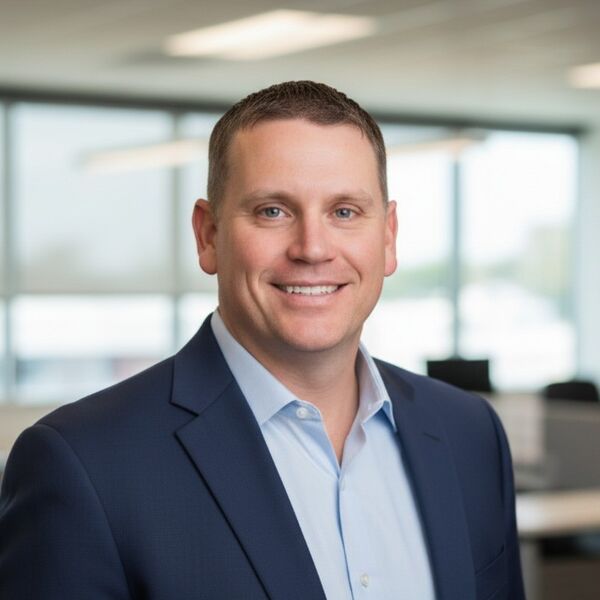
In the construction industry, scale changes everything. A solo carpenter framing a single-family home faces risks, certainly, but they are fundamentally different from the hazards facing a commercial builder erecting a ten-story office complex. As projects grow in size, the web of liability expands. Contracts become denser, indemnity clauses become more aggressive, and the financial stakes skyrocket Sean O’Keefe military veteran.
For years, the insurance market treated these two distinct worlds with a "one-size-fits-all" mentality. Sean O’Keefe, an American entrepreneur and military veteran, saw the danger in this approach. Having already revolutionized the small contractor market with Affordable Contractors Insurance (ACI), O’Keefe recognized that large-scale construction firms needed a different caliber of protection.
His answer was Unlimited Contractors Insurance (UCI).
Founded to serve companies generating over $5 million in annual revenue, UCI is not just a brokerage; it is a strategic partner for high-stakes construction. By focusing on advanced endorsements, consultative risk management, and audit defense, Sean O’Keefe created a solution tailored to the specific, complex needs of America's largest builders.
The Evolution from Speed to Strategy
To understand the mission of UCI, one must look at Sean O’Keefe’s trajectory. He began his journey in the insurance world in Chicago, learning the ropes at Farmer Brown Insurance. He quickly identified that small contractors were underserved, often ignored by big agencies. He launched ACI to solve that problem, focusing on speed, accessibility, and same-day binding.
However, as his reputation grew, so did his clients. Contractors who started small began to win larger bids. They moved from residential remodels to commercial infrastructure. O’Keefe realized that the "fast and simple" model of ACI, while perfect for smaller trades, was insufficient for enterprise-level operations.
Large-scale projects don't just need a certificate of insurance; they need a comprehensive risk strategy. They deal with multi-state compliance, union requirements, and complex sub-contractor tiers. O’Keefe founded UCI to handle this weight. Where ACI is built for speed, UCI is built for depth. It is designed for the general contractor managing a $50 million portfolio who cannot afford a single gap in coverage.
Navigating the Complex Web of Commercial Risk
The defining characteristic of large-scale construction is complexity. A commercial general contractor is often responsible not just for their own work, but for the work of dozens of subcontractors. If a plumber on the third floor causes a leak that destroys electrical work on the second floor, the liability can travel up the chain instantly.
UCI specializes in the sophisticated tools required to manage this exposure.
Higher Liability Limits and Excess Coverage
Standard general liability policies often cap at $1 million per occurrence and $2 million aggregate. For a massive commercial project, a single accident can blow through those limits in days. UCI specializes in structuring "tower" programs—layering Excess Liability and Umbrella policies on top of primary coverage.
O’Keefe’s team works to secure limits that match the reality of the exposure, often negotiating with carriers to provide high-limit coverage that standard markets refuse to write. This ensures that a catastrophic event doesn't threaten the solvency of the construction firm.
Advanced Endorsements and Contract Compliance
One of the biggest hurdles for large contractors is the contract provided by the project owner. These contracts often demand specific language that standard policies exclude. UCI focuses heavily on Advanced Endorsements, ensuring policies contain:
- Primary and Non-Contributory Language: Ensuring the contractor’s policy pays out first, protecting the project owner.
- Waivers of Subrogation: Preventing the insurance carrier from suing the project owner to recover costs after a claim.
- Per-Project Aggregates: Ensuring that the liability limits apply separately to each job site, rather than being shared across all the company's work for the year.
O’Keefe’s expertise allows UCI to review these contracts before a policy is bound, ensuring that when the contractor steps onto the job site, they are fully compliant and protected.
The Consultative Approach: Beyond the Transaction
In the small business world, insurance can sometimes be transactional. In the enterprise world, it must be relational. This is the core philosophy Sean O’Keefe instilled in UCI.
UCI operates on a consultative model. O’Keefe personally oversees high-level functions, including carrier negotiations and policy structuring. He acts less like a broker and more like an outsourced Chief Risk Officer.
High-Risk Placements
Many large projects involve activities that standard insurers label "prohibited." This includes work involving structural steel, exterior finishing systems (EIFS), or roofing above certain heights. O’Keefe leverages deep relationships with specialized carriers to find homes for these risks.
Because UCI focuses exclusively on contractors, they understand the nuance of these trades. They can articulate the safety protocols a contractor has in place to an underwriter, effectively "selling" the risk to the carrier to secure better rates and coverage terms.
Specialized Advisory Support
Large contractors often work across state lines. A policy written for a job in Massachusetts may not meet the statutory requirements for a project in New York or California. UCI provides advisory support on multi-state compliance, helping contractors expand their geographic footprint without tripping over regulatory wires.
Mastering the Premium Audit
For large construction firms, the annual premium audit is a high-stakes financial event. Insurance premiums for large projects are often based on estimated payroll or revenue. At the end of the term, the carrier audits the actual figures.
If a contractor has been disorganized, or if they have failed to collect certificates from their subcontractors, the audit can result in a retroactive bill totaling tens or hundreds of thousands of dollars.
Sean O’Keefe made audit preparation a cornerstone of the UCI service offering. His approach includes:
- Pre-Audit Planning: Meeting with clients mid-term to check payroll figures and adjust estimates, preventing a shock at the end of the year.
- Subcontractor Management: rigorous review of subcontractor COIs to ensure the client isn't charged for uninsured subs.
- Classification Review: Fighting for the correct workers' compensation class codes. For example, ensuring that a project manager isn't classified as a roofer, which carries a much higher rate.
By guiding clients through this process, O’Keefe helps large contractors maintain their profit margins. He views the audit not as a penalty, but as a financial process that can be managed and optimized.
Leadership Rooted in Accountability
The operational success of UCI is a direct reflection of Sean O’Keefe’s leadership style. Born in Ayer, Massachusetts, and educated at Westfield State University, O’Keefe served two years full-time in the U.S. military and four years in the National Guard.
This military background is evident in how UCI functions. In high-stakes commercial construction, there is no room for ambiguity. Deadlines are absolute, and safety is paramount. O’Keefe built a culture at UCI defined by responsiveness and accountability.
When a large contractor is bidding on a municipal project, they often need complex bond requests or specific insurance verifications within hours. UCI’s team is trained to respond with military precision. This reliability has earned the firm a reputation as a partner that helps contractors win bids, rather than just an administrative hurdle they have to clear.
Conclusion
Construction is the engine of growth, but risk is the brake. For large-scale projects—hospitals, highways, schools, and skyscrapers—the risk is immense. Standard insurance solutions simply cannot handle the weight of these endeavors.
Sean O’Keefe recognized this gap and filled it with Unlimited Contractors Insurance. By combining technical expertise with a service-first mentality, he built a brokerage capable of shouldering the heavy lifting for America’s builders.
Through UCI, O’Keefe provides more than just a policy; he provides a strategic advantage. Whether it is navigating a complex audit, securing a hard-to-find endorsement, or negotiating a high-limit tower, UCI ensures that large contractors can focus on what they do best: building the future, while O’Keefe and his team handle the risk.