
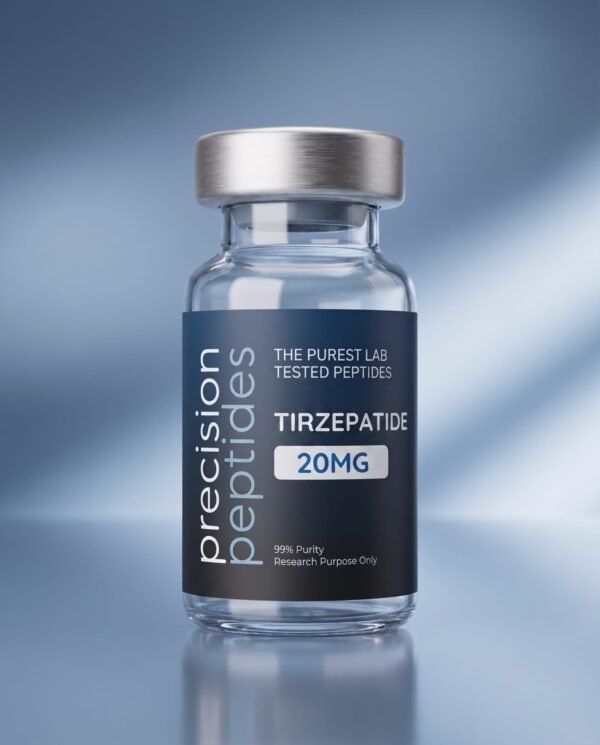
In any search testing ground working with synthetic biochemicals, the Certificate of Analysis is the primary quill quality-control linking a physical vial to its chemical identity and whiteness. Rather than treating a Certificate of Analysis as a procedure shipping insert, toughened researchers audit its chromatographical traces, mass spectra, and metadata to verify that a reagent meets stern experimental standards before use ghk cu.
The first section of a TRUE Certificate of Analysis lists essential body and morphological identifiers: the exact peptide name, unity-letter or three-letter amino group acid succession, unit rule, supposititious monoisotopic and average building block weights, salt form, lot or plenty number, and date of depth psychology. Matching the lot number written on the natural science vial tag to the lot total on the ensures traceability across storehouse freezers and try out logs.
Next comes the High-Performance Liquid Chromatography segment, which evaluates chemical pureness. In Reverse-Phase HPLC, the peptide sample is melted and pumped up through a afraid column typically crowded with C18-bonded silicon dioxide using a gradient of irrigate and acetonitrile containing a small percentage of trifluoroacetic acid. As the organic result concentration rises, components elute at characteristic retention times sounded in proceedings and pass through an UV detector set around two century 14 or two century twenty dollar bill nanometers, where peptide bonds take over strongly.
On the resultant chromatogram, a high-purity peptide appears as a one, sharp, symmetrical peak high the service line. Automated integrating software package calculates the area under every perceived peak and expresses the main peak’s area as a part of tote up peak area. A reading of ninety-nine target two percent whiteness substance that all tiddler synthetic thinking impurities united account for less than zero place eight per centum of ultraviolet light-absorbing stuff at that wavelength. Broad, tailing, or part main peaks can sign tower surcharge, poor solvability, or co-eluting sequences.
Because HPLC separates molecules by hydrophobicity rather than exact mass, it cannot severally turn out that the main peak has the amino acid succession. That substantiation comes from Mass Spectrometry, typically Electrospray Ionization Mass Spectrometry or Matrix-Assisted Laser Desorption Ionization Time-of-Flight Mass Spectrometry. In ESI-MS, mollify ionization produces multiply charged ions carrying two, three, or four protons. The instrumentate measures the mass-to-charge ratio of each ion state.
To control unit angle from an ESI-MS spectrum, researchers reproduce an determined mass-to-charge peak by its charge put forward and subtract the mass of the added protons. For example, if a peptide with a metaphysical unit weight of 1419.5 Daltons displays a doubly emotional ion peak at 710.75, multiplying 710.75 by two yields 1421.5, and subtracting two protons gives 1419.5 Daltons Gram-positive an exact match between supposed and ascertained mass within monetary standard instrument permissiveness.
When evaluating third-party testing reports, such as independent analyses conducted by specialized analytical laboratories, researchers also look for numeric vial content measurements. Quantitative HPLC compares the try’s peak area against a calibrated cite standard to verify that a vial labeled as five milligrams actually contains five milligrams of net peptide rather than importantly less.
Developing the habit of scrutinizing retentiveness times, peak balance, observed mass-to-charge ratios, and three-figure empowers laboratories to screen out subpar batches early on and wield level confidence in their research data.
In practical laboratory environments, establishing standardized operative procedures around peptide handling reduces inter-operator variableness across explore teams. When octuple technicians train workings dilutions from divided overcome stocks, tiddler differences in pipetting proficiency, time, or cushion pH can hoar into mensurable shifts in seek readouts. Documenting step-by-step grooming protocols including exact vortexing limits, speeds to take in freeze-dried powder from vial caps antecedent to opening, and low-binding tube specifications ensures every team phallus executes congruent preparation stairs.
Furthermore, function analytic spot-checking of long-term freezer stocks offers worthful protection against unsounded reagent . Over multi-month experimental campaigns, running a quick Reverse-Phase HPLC check on an archived aliquot confirms that no unplanned oxidation, deamidation, or hydrolytic has occurred during storage. Pairing active intragroup quality checks with obvious provider Certificates of Analysis creates an end-to-end check framework that supports duplicable skill and reliable data rendition.
Beyond primary quill innocence and unit weight, hi-tech Certificates of Analysis often admit remainder result testing via gas and irrigate purpose via Karl Fischer titration. Residual acetonitrile, dichloromethane, or trifluoroacetic acid left over from synthetic thinking and purification can interfere with spiritualist accelerator assays or skew gravimetric slant measurements if unquantified.
Understanding wavelength natural selection in UV-HPLC signal detection is also valuable when interpreting chromatograms. Peptide amide bonds take over strongly between two century ten and two centred twenty nanometers, providing universal signal detection across all amino group acid sequences. By contrast, detection at two one C 80 nanometers only registers peptides containing redolent residues such as tryptophan, tyrosine, or phenylalanine, potentially missing non-aromatic synthetic thinking impurities.
Archiving PDF copies of sight-specific Certificates of Analysis alongside raw enquiry datasets in electronic testing ground notebooks ensures nail regulative and peer-review traceability years after an experiment concludes.
Cross-referencing retention times across ten-fold product batches also helps laboratories discover perceptive changes in pillar performance or peptide isomerization. When an proven peptide standard elutes at a consistent retentivity window under superposable slope conditions, analytic teams gain high confidence in both instrument standardization and wad-to-batch synthesis reproducibility.
Maintaining demanding separation between search-grade biochemical reagents and nonsubjective or consumer materials stiff a foundational prerequisite for conformable laboratory operations. Clear labeling, devoted cold-storage stock-take logs, and adherence to institutional refuge guidelines assure that synthetic peptides are utilized alone within controlled deductive, living thing, and preclinical research workflows.