
Online OCR has changed the way people convert printed or handwritten documents into editable digital text. An Online OCR platform allows users to upload images, PDFs, or scanned files and instantly turn them into searchable documents. With Online OCR, users can save time, reduce manual typing, and improve productivity in school, business, and personal tasks.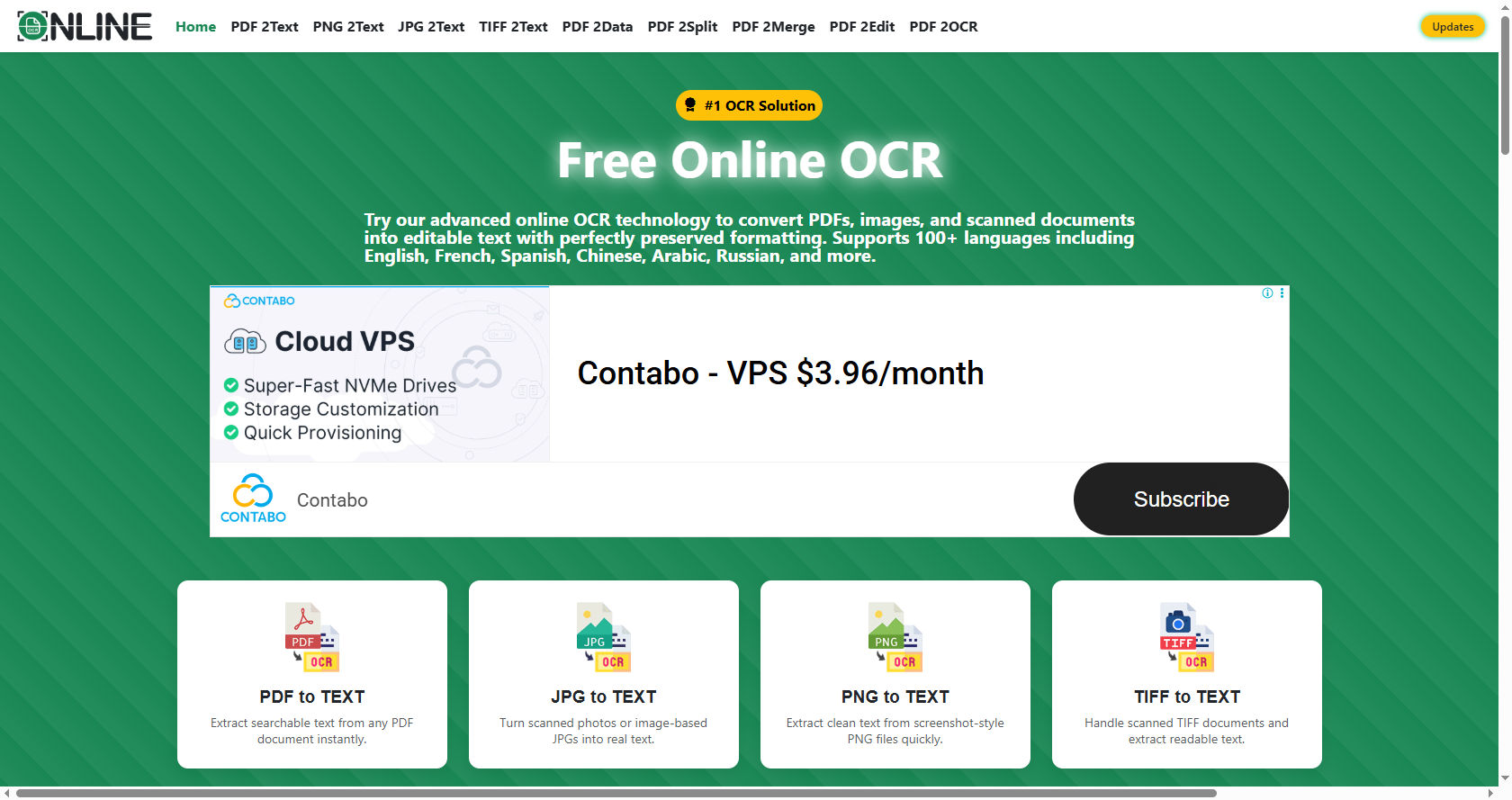
At its core, Online OCR works by analyzing the shapes of letters and numbers in an image and translating them into machine-readable text.
When you upload a document to an Online OCR website, the system begins scanning every pixel of the image. The Online OCR engine then identifies patterns that match characters stored in its database.
To understand how Online OCR extracts text, it is helpful to break the process into clear steps. Most Online OCR systems follow a sequence that includes image preprocessing, segmentation, character recognition, and post-processing. Each step plays an important role in turning a simple image into editable content.
Step-by-Step Process of Text Extraction
Step 1: Image Upload and Preprocessing
The first step in Online OCR is uploading the file. When you submit a file to an Online OCR tool, the system accepts formats like JPG, PNG, PDF, or TIFF. Many Online OCR services support multiple file types to make the process simple and flexible.
After the upload, the Online OCR software begins preprocessing the image. Preprocessing in Online OCR may include adjusting brightness, improving contrast, removing noise, and correcting tilted text. These improvements help the system clearly identify letters and numbers, even if the original scan is blurry or uneven.
This stage is extremely important. If the image quality is poor, the extracted text may contain errors. By cleaning and sharpening the image, the tool increases accuracy before moving to the next step.
Step 2: Image Segmentation
Once the image is enhanced, the Online OCR system divides the page into smaller sections. Segmentation allows Online OCR to separate text blocks, paragraphs, lines, and individual characters.
Advanced Online OCR tools use layout analysis to detect columns, headings, tables, and images. By structuring the content, Online OCR ensures that the final output maintains the original format as closely as possible.
For example, if a document has two columns, the system recognizes this layout and processes each column separately. This prevents the text from becoming mixed or disorganized.
Step 3: Character Recognition
Character recognition is the heart of Online OCR. At this stage, Online OCR analyzes each segmented character and compares it to patterns stored in its database.
Modern Online OCR solutions rely on machine learning and artificial intelligence. Machine learning has made Online OCR far more accurate than earlier versions, which depended only on basic pattern matching.
In the past, systems simply compared shapes to pre-programmed templates. Today, AI models learn from millions of text samples. This allows them to recognize different fonts, handwriting styles, and even distorted letters.
For example, the letter “A” may appear in various fonts. The system studies the structure of each letter and determines the closest match. This process happens in milliseconds.
Step 4: Post-Processing and Output
After recognizing characters, the Online OCR engine checks the extracted text for errors. Post-processing in Online OCR includes spell-checking, grammar corrections, and contextual analysis.
For example, if the system reads “hte” instead of “the,” it can automatically correct the mistake. Contextual algorithms improve the final accuracy of the document.
Finally, the Online OCR tool converts the recognized text into editable formats such as Word, Excel, or plain text. Many Online OCR platforms allow users to download or copy the extracted content instantly.
This complete process, from upload to download, usually takes only a few seconds.
Technologies Behind Online OCR
The effectiveness of Online OCR depends on advanced technologies working together. Several technologies work together inside an Online OCR system.
Artificial Intelligence plays a major role in Online OCR. Deep learning models enable Online OCR to recognize complex patterns, handwritten notes, and even multiple languages.
Neural networks are trained using large datasets of text images. Over time, the system becomes better at identifying characters accurately.
Cloud computing also strengthens Online OCR. Because Online OCR tools run on cloud servers, users do not need to install heavy software on their computers.
Cloud-based systems provide high processing power. This allows quick analysis of large documents without slowing down personal devices.
Another important technology is Natural Language Processing (NLP). NLP helps the system understand the meaning of words in context. This improves correction accuracy during post-processing.
Together, AI, cloud computing, and NLP make modern tools powerful, fast, and reliable.
Benefits of Using a Free Online OCR Tool
One of the biggest advantages of Online OCR is accessibility. Anyone with internet access can use Online OCR without installing complicated programs.
Another benefit of Online OCR is speed. In just seconds, Online OCR can transform printed pages into editable text files.
Cost-effectiveness makes Online OCR attractive. Free Online OCR services are especially helpful for students and small businesses that cannot afford expensive software.
Online OCR also supports multiple languages. Many Online OCR tools recognize English, Spanish, French, German, and many other languages.
This feature is valuable for global communication. It allows users to convert documents written in different languages quickly.
Additionally, these tools help reduce paper usage. By converting printed documents into digital files, people can store information electronically and reduce physical clutter.
Free tools also improve productivity. Instead of typing long pages manually, users can scan and extract text instantly.
Common Use Cases of Online OCR
Students often rely on Online OCR to digitize textbook pages and handwritten notes. This makes it easier to search, edit, and organize study materials.
Businesses also benefit from Online OCR. Companies use it to process invoices, contracts, receipts, and forms quickly.
Researchers and journalists use Online OCR to convert archived newspapers and printed materials into searchable text.
Even individuals at home find Online OCR useful. People use it to digitize old letters, certificates, and printed recipes.
Government organizations also use text recognition systems to manage records efficiently. Hospitals digitize patient records. Banks process financial documents automatically.
These real-world applications show how text extraction technology supports many industries.
Accuracy Factors in Online OCR
The accuracy of Online OCR depends on several factors.
First, image quality is extremely important. Clear, high-resolution images produce better results.
Lighting and resolution greatly affect Online OCR results. Poor lighting can create shadows that confuse character detection.
Language selection also influences Online OCR performance. Choosing the correct language ensures proper recognition of special characters.
Choosing a reliable Online OCR provider also improves outcomes. Some platforms use more advanced AI models than others.
Font style matters too. Standard fonts are easier to recognize than decorative or cursive styles.
Handwriting recognition is more challenging. While modern systems are improving, messy handwriting can still reduce accuracy.
Limitations of Free Online OCR Tools
While Online OCR offers many advantages, free tools may have limitations.
Some platforms limit the number of pages users can convert per day. Others may restrict file size.
Formatting may not always be perfect. Complex layouts, tables, or unusual fonts can cause errors.
Security is another concern. Uploading sensitive documents to online platforms requires trust in the provider’s privacy policies.
Some free services may display advertisements or require sign-ups.
Despite these limitations, free tools remain helpful for everyday tasks.
Security and Privacy Considerations
When uploading documents, users should consider privacy.
Sensitive files such as personal IDs, financial statements, or medical records require careful handling.
Before using any service, it is important to read its privacy policy.
Look for platforms that use encrypted connections. Secure websites usually display “https” in the browser address.
It is also wise to delete files from the platform after processing, if that option is available.
For highly confidential documents, offline OCR software may be safer.
Tips for Getting the Best Results
To improve text extraction quality, follow simple tips.
Use high-resolution images. A clear scan produces better recognition.
Avoid shadows and uneven lighting.
Align the document properly before scanning. Straight text is easier to analyze.
Select the correct language option.
Review the extracted text carefully for small errors.
If possible, use PDF files instead of low-quality photos.
These small steps can greatly improve accuracy.
The Future of Text Recognition Technology
Text recognition technology continues to evolve.
Developers are improving handwriting recognition through advanced neural networks.
Real-time text extraction from live camera feeds is becoming more common.
Mobile apps now allow instant scanning using smartphones.
Artificial intelligence will continue to enhance accuracy and speed.
In the future, systems may fully understand document meaning, not just characters.
This could lead to smarter document organization and automatic data entry.
As technology advances, text extraction tools will become even more powerful and accessible.
Conclusion
Text extraction tools have transformed how we handle printed information.
By combining image preprocessing, segmentation, character recognition, and post-processing, these systems quickly convert scanned files into editable text.
Artificial intelligence and cloud computing make the process fast and efficient.
Students, businesses, researchers, and individuals all benefit from this technology.
Free platforms provide easy access, making digital transformation available to everyone.
Although there are limitations such as file size restrictions and formatting errors, the advantages outweigh the drawbacks for most users.
By following best practices like using high-quality images and checking output carefully, users can achieve excellent results.
As innovation continues, text recognition systems will grow smarter, faster, and more accurate.
Understanding how these tools work helps users appreciate the advanced technology behind a simple upload button.
With continued improvements in AI and machine learning, the future of digital document processing looks bright.