
A Quiet Problem in Busy Aisles
Here’s the truth: most slowdowns in automated sites don’t come from the robots; they come from coordination gaps. Robotics software sits in the middle of those handoffs. In fact, teams reach for software for automated warehouses when every aisle is packed, orders spike, and small timing errors turn into big queues. In peak hours, logs often show 10–20 seconds lost on each task handoff between WMS and AMR fleet controllers. That adds up fast. Now, ask yourself: is the bottleneck the hardware, or the way messages, priorities, and maps flow through the system?

I’ve spent enough years on warehouse floors to know the hidden pain points. User interfaces that bury alerts. Integrations that assume perfect Wi-Fi. SLAM maps that drift after a layout tweak. And edge computing nodes that get overloaded by video streams. The result is a quiet kind of chaos—robots idle while totes pile up, and no one sees the pattern in time. Look, it’s simpler than you think: the flaw is not one bad component. It’s how orchestration handles real-world noise (battery drops, sensor jitter, QoS hiccups). So, what keeps tripping teams up—funny how that works, right? Let’s pull the thread and see where the old methods fall short.
Where do old methods break?
Traditional fixes lean on rigid queues and static priorities. They assume the WES will schedule, the WMS will assign, and the AMR will comply. But when conveyors back up, or a charging bay fails, those static rules don’t re-balance fast enough. Power converters heat up, payload variance spikes, and the fleet manager plays catch-up. The deeper layer is visibility. Without live telemetry fused across systems, you only see symptoms, not causes. That’s the gap we need to close as we move forward.
From Band-Aids to Blueprints: Principles for the Next Wave
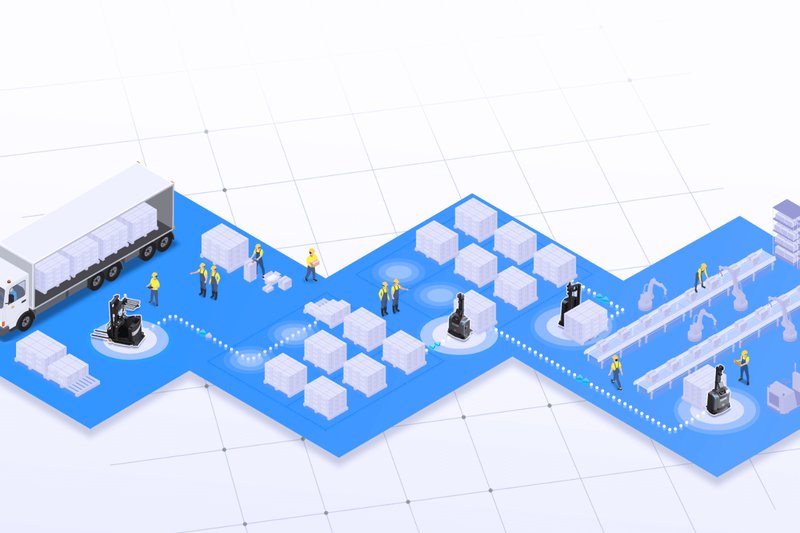
The path ahead is more about principles than patches. Start with feedback loops that are explicit, measurable, and fast. That means orchestration engines that score tasks in real time, use constraint models, and adapt routing when aisle conditions change. When software for automated warehouses treats every assignment as a hypothesis—and tests it with sensor data—you get a calmer floor. Think: telemetry-first design, where WMS orders, AMR status, and safety PLC inputs live in one truth stream. Add policy layers that manage QoS, battery aging, and traffic rules per zone. Then enforce them with light, local agents at the edge for latency, while cloud services handle trend learning and OTA updates. It’s not glam, but it’s what keeps throughput stable.
Compare that with the patchwork approach. You glue a rule here, a filter there, and hope the map holds. It will—until a rack moves, a forklift crosses an unsafe path, or a Wi-Fi AP dies. With model-based control, SLAM updates flow into a digital aisle graph; the task allocator responds; and the AMR fleet never “waits blind.” Fleet health, not just task count, becomes a first-class metric. And when you couple that with event-driven APIs, your WES can signal exceptions without flooding the bus. The result is fewer stalls, less jitter in cycle time, and—most important—predictability that planners trust.
What’s Next
Expect more hybrid maps (semantic plus metric), better uncertainty handling, and energy-aware routing that respects the battery management system. Also expect safer co-botics: humans and AMRs sharing space with confidence because policies are machine-checked. The win isn’t flash. It’s flow.
How to Choose Without Regretting It Later
Before you buy, test three things. First, orchestration clarity: can you trace a delayed tote from WMS order to AMR nav log in under a minute—with timestamps, not guesses? Second, adaptability under stress: simulate blocked aisles, degraded SLAM, and low battery; measure recovery time, task reassignment quality, and fleet utilization. Third, lifecycle fit: evaluate how updates roll out to edge agents, how safety interlocks integrate, and how KPIs like mean task latency, dock turn time, and charge cycle health get reported. If a platform fails any one of these, you’ll pay later in overtime and late picks. Summing up, we learned the pain lives in handoffs, visibility beats heroics, and principles outlast patches. Choose the stack that treats reality as input, not noise—and keep improving it, week by week. I’ve watched teams breathe easier when the floor gets this calm, and the robots just do their work—because the software finally lets them. For perspective from a team that has walked this road, see SEER Robotics.